PDPP Learning

Author: joeclarke

Week 3 Blog

Describe how Multi-media Learning Theory can help us create more effective instructional videos and tutorials.

I think Multi-media Learning Theory proves to be extremely beneficial when attempting to “get through” to a learner. As an instructor it is hard to put into words the benefits that come from meshing various forms of media, such as text and visuals. I have never put any serious thought into the construction and design of instructional videos but the more I think critically about it the Learning Theory is extremely evident. Over the weekend I was researching a salmon recipe along with a marinade and the website contained a combination of pictures/videos (the preparation process with the fish, the marinade, and the ideal final product) along with descriptive text, measurements, and general steps for the entire process. This is a perfect example of Mulit-media Learning Theory that helps educate a novice learner (myself the cook) in executing a task. Multi-media provides more entry points for learners and their varying styles, allowing for more inclusion and heightened chances of getting through to the majority of students. 

Describe how you could use video or audio editing as the assignment medium for the subject and grade level you will be teaching (if at all), and what you could do to make the assignment as engaging as possible.

I will likely be teaching Social Studies / History between Grades 9-12. Integrating video & audio editing can be a beneficial tool to use when teaching this subject and level. I could see it being very useful when assigning short videos that are to be watched for homework. If I could master this skill I could record educational videos while pausing them and utilizing a voice over to emphasize key concepts and themes that I want my students to be grasping. 
The Evolution of Education

Do we need to reimagine education?

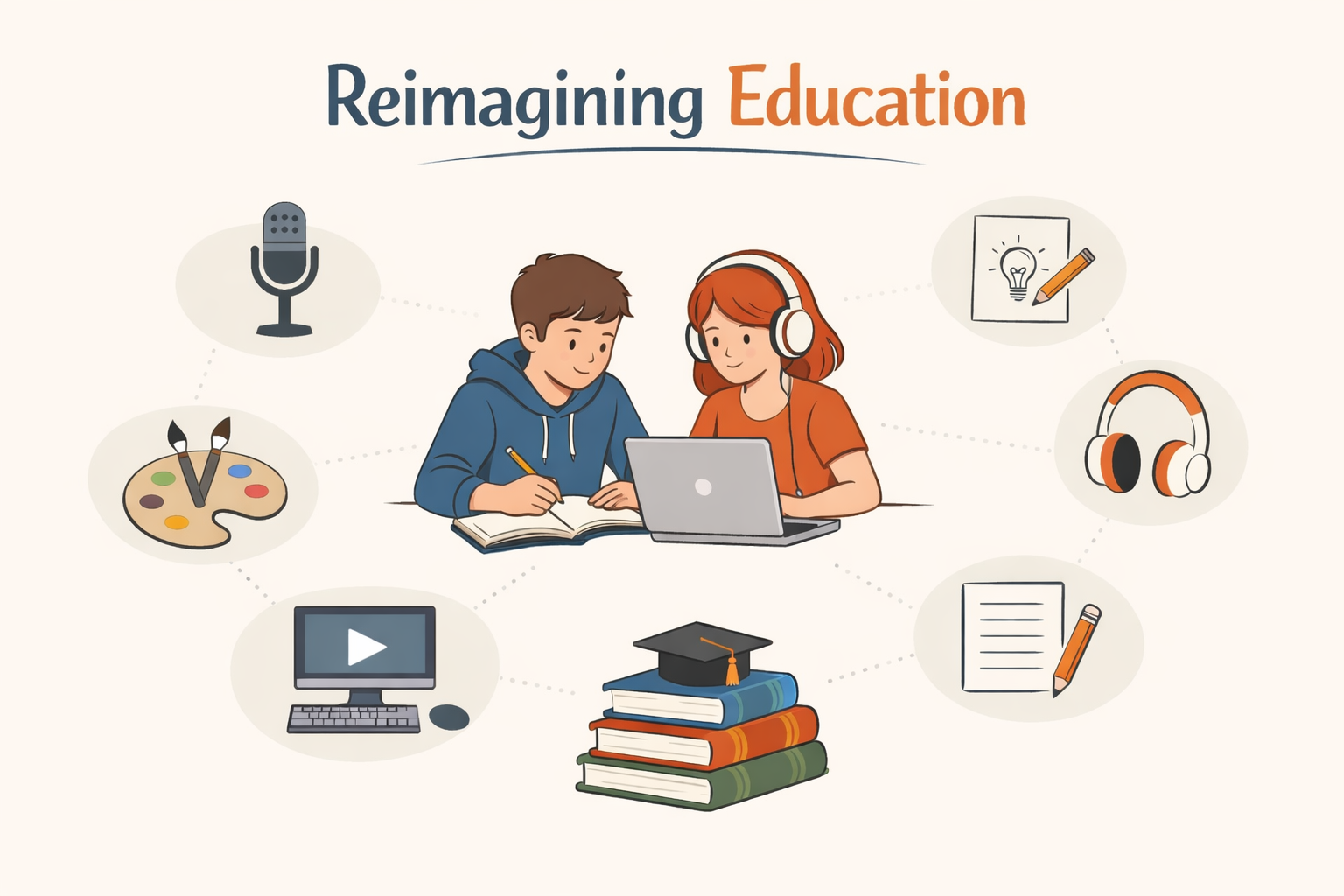
Do we need to reimagine education? Yes. When it comes to this “reimagination”, I believe there are endless possibilities to shift the educational landscape. Education, just like any other topic or system in our society, always has room for evolution. As educators we must continue to understand the necessity of catering to a wide range of learners and learning styles. When studying a topic or assigning projects, the ability to provide a range of entry points is crucial to student success, engagement and inclusion. Entry points for project-work may include components of visual (diagrams, mapping, videos), auditory (discussion or podcasts), text (reading, writing, essays), or kinesthetic (hands-on or building). As a Social Studies and PHE teacher I also have seen the benefits of movement in the classroom. Further providing alternative learning spaces (changes of scenery) and getting kids moving also enhances educational experiences.

What obstacles do educators often face when they try to change pedagogy?

There are certainly factors that educators face when trying to alter their teaching theories. Personally I believe that many teachers desire to alter their approach but struggle with the confidence and tools to do so. The education system is quite structured and it is easy to follow a traditional blueprint. Many teachers also may fear challenging the typical status quo because of perceived pressure from administration and colleagues. Parents may also apply pressure if they believe their child’s education/classwork is taking an unconventional shape. Lack of time and resources (i.e. classroom space) are other factors that may prevent an educator from changing their approach. 

What concerns and/or excites you about this approach?

I think one of my biggest concerns in bringing new approaches to the classroom would be potential push back from administration and parents. Shifting away from the traditional approach of teaching is bound to stir some emotion and/or questions from observers outside of the classroom, especially as a new teacher. Getting past this initial stage and building confidence to take some risks I think is huge for new teachers. There are many things to be excited about though. With the emergence of technology and a diversified skill set within a range of students there is a huge potential for a shift in teaching content. More than ever, students have the tools and technology to learn and create creatively.