I found this course to be useful, especially as someone who is not as tech-savvy as other teacher candidates. The one key takeaway from this course that I will apply to future teaching revolves around privacy concerns. Although technology has become such a pivotal component of education, teacher’s must have extreme awareness with what technologies they introduce to their students. It is best to consult EdTech specialists within your school or district before implementing anything. In an ever changing tech world, there is so much unknown still, especially in terms of platform privacy and data storage. I have attached a small secondary article below that assesses these concerns. Other tools that I enjoyed in this course was the introduction to ClaudeAi. This was a platform I was not previously aware of and was blown away by its capabilities! I was able to have Claude generate a “Jeopardy! Style” study game for me centred around History 12 material and the War in the Pacific. Claude will be a tool that I experiment and utilize moving forward.
I found this Free Inquiry assignment to be an interesting and useful side project throughout this semester. It was a pleasant opportunity to reflect and improve upon an individual passion project. Practicing a language, just like any other skill, requires consistent effort and repetition to improve. I enjoyed this as an excuse to refine my Spanish skills and stay “sharp.” When I reflect upon my greatest Spanish learning experiences, many of them involved travel and immersion where I was exposed to the language daily. This keeps things fresh in the mind and creates an easier process for our brains to recall. I recently wrote a term paper for my English Language Learning course which reflected upon my lived experiences, my Spanish development, and how they were strengthened via the scaffolding and framework that I learned through formal coursework. I have attached this paper below as it offers a personalized reflection upon my life story tied to the language of Spanish.
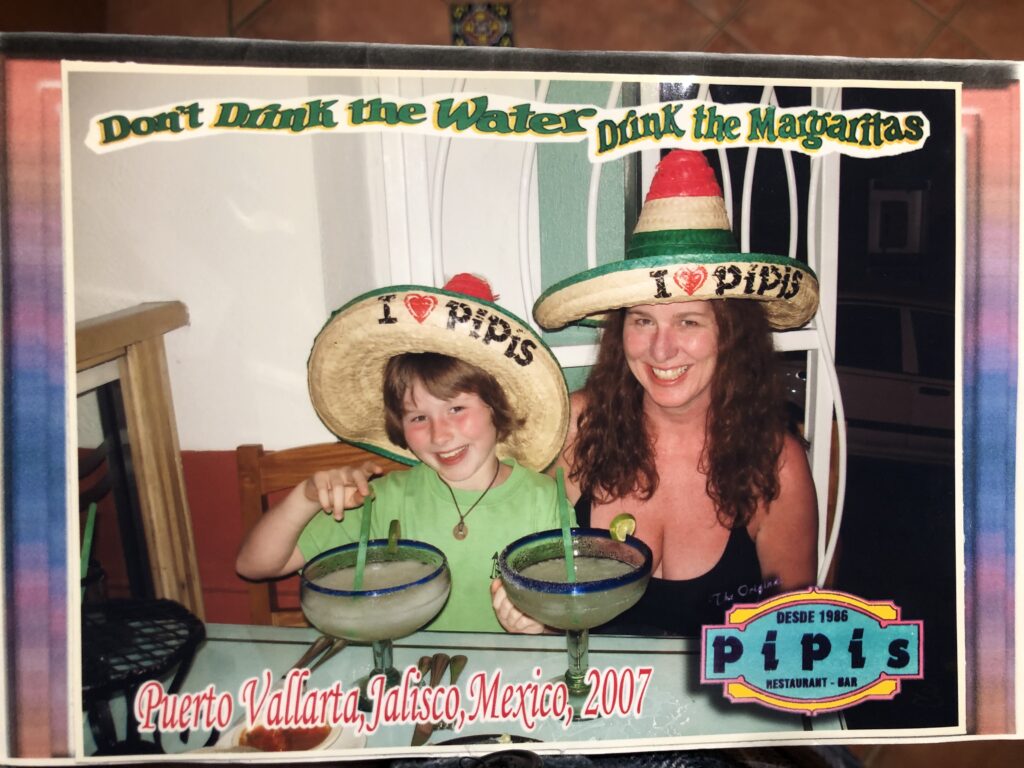
One of our first family trips to Mexico – Puerto Vallarta, 2007 (Age 9)
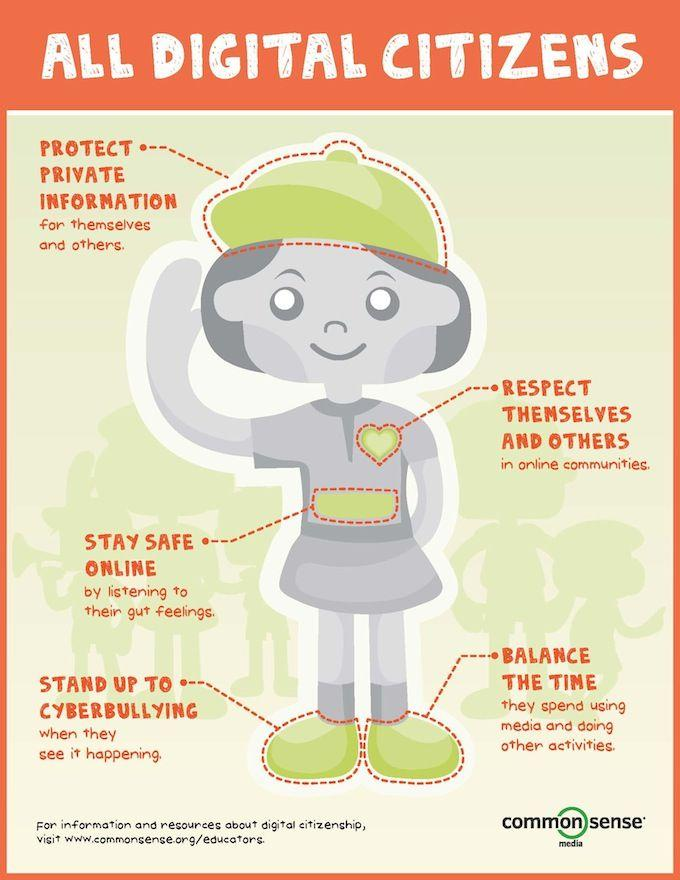
This week’s focus on digital citizenship and online safety felt really relevant to me, especially privacy and security, and how easily those things get overlooked in everyday situations.
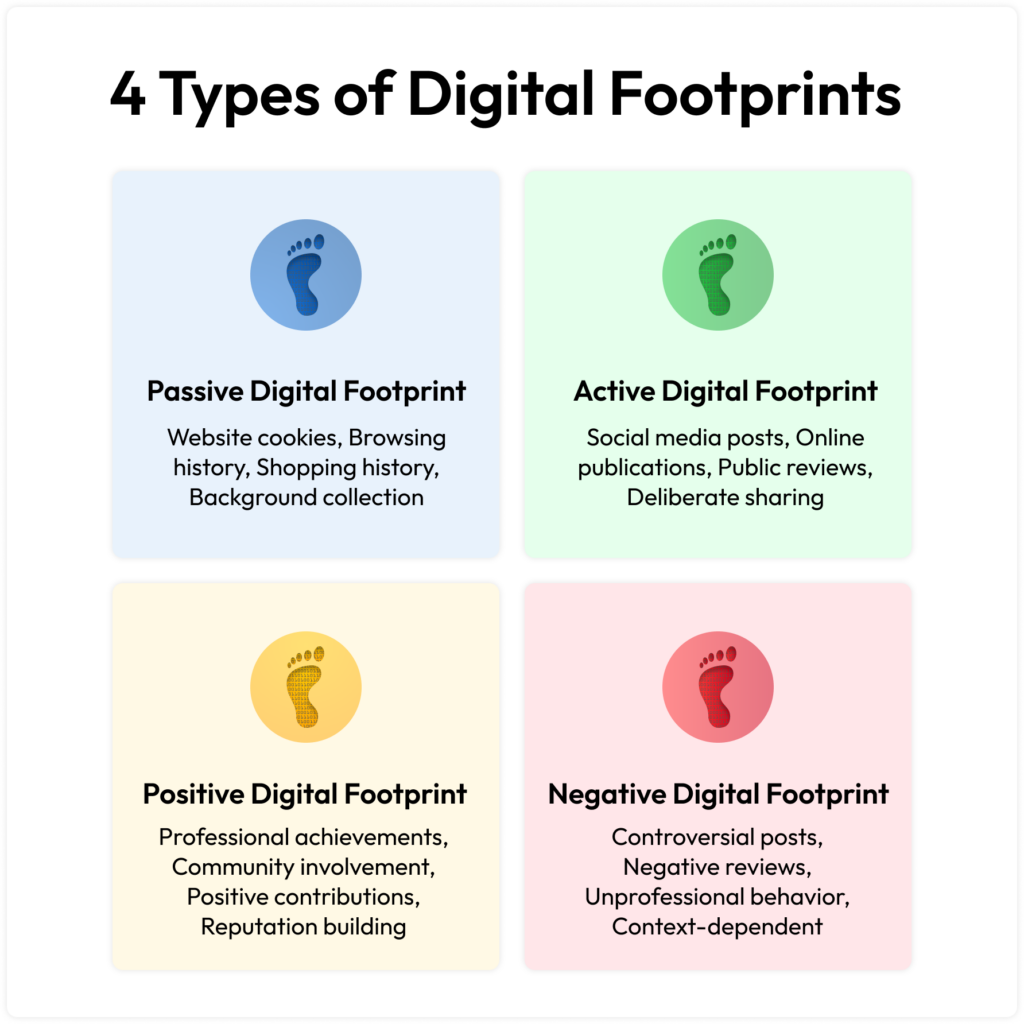
It actually brought me back to my own high school experience. I saw a lot of situations where photos or videos got shared without someone’s consent and quickly turned into embarrassment or bullying. At the time it didn’t always seem like a big deal, but looking back, it’s clear how harmful that can be. Once something is online, it spreads fast and is nearly impossible to take back. Since I I graduated in 2015, I was there when a lot of the platforms (Instagram, Twitter, Snapchat) students still use today were just taking off, so I’ve seen both sides firsthand. Because of that, I don’t think social media is something that can just be avoided, it’s a huge part of how students connect. The more realistic approach is teaching them how to use it responsibly, which I think gives me a bit of an advantage as a future teacher. This connects naturally to digital consent, something I don’t think gets talked about enough. In PHE we already cover consent and healthy relationships, but those conversations don’t always extend into online spaces. Asking before posting, respecting boundaries online, and understanding how content spreads are just as important as anything happening in person. Overall, this week reinforced that online behaviour is real behaviour. It has real impacts on relationships and wellbeing, and in PHE especially, digital citizenship fits naturally alongside what we already teach around respect and healthy communication.
These EdCamp videos are a great reminder of just how powerful collaborative learning can be, not only for students but for teachers too. Collaboration, as we have learned throughout our practicum, is vital as it naturally increases engagement and makes learning more holistic. Instead of sitting through a set schedule with expert speakers doing all the talking, participants get to shape their own sessions around things they genuinely care about. It challenges the traditional ideas of professional development, resulting in less passive listening and more genuine involvement. What makes this model intriguing is that everyone brings something to the table. Teachers come from all different backgrounds and have a ton of varied experiences, so the strategies and ideas that come up in these conversations are ones that may not be brought up in conventional workshops. EdCamp’s are grounded in actual discussion, not just someone talking at you. When you have a hand in deciding what you’re learning about, you’re way more likely to actually care about the conversation. It stops feeling like a lecture and starts feeling like a real exchange of ideas. At the end of the day, the video is a good reminder that learning doesn’t have to be a solo thing. It gets a lot richer when it’s built around community, real conversations, and shared experiences.
PHE is often seen as a movement-based subject, which is why technology isn’t always the first thing people associate with it. That said, digital tools are starting to play a bigger role in supporting learning in PHE classrooms and are worth paying attention to.
Tools like VEO and Hudl allow students to record and review their movements in slow motion, giving them an opportunity to analyze their technique and make improvements. Technology can also support fitness tracking and goal setting, letting students actually see their progress over time rather than just guessing at it.
Platforms like Flip or Google Classroom can create space for student reflection through video responses, journals, or exit tickets. This pushes students to think more deeply about what they learned and how they improved. Tools like Google Forms or choice boards can also give students more voice and ownership in their learning, which usually goes a long way in keeping them engaged.
It is worth acknowledging the real challenges that come with this. Unequal access to devices, privacy concerns, and making sure screen time does not overshadow physical activity. When used with intention though, digital tools can improve a PHE experience while still keeping movement as the central focus.
References:
Cui, Z., Song, Y., & Du, X. (2024). Multilevel modeling of technology use, student engagement, and fitness outcomes in physical education classes. Frontiers in Psychology, 15. https://doi.org/10.3389/fpsyg.2024.1458899
Physical and Health Education Canada. (2025, May 26). Incorporating technology into physical education: Enhancing engagement and learning. https://phecanada.ca/professional-learning/journal/incorporating-technology-physical-education-enhancing-engagement-and
Physical and Health Education Canada. (2024, February 6). Ways to include digital literacy in physical and health education. https://phecanada.ca/professional-learning/journal/ways-include-digital-literacy-physical-and-health-educationGopher Sport. (n.d.). Using video analysis in PE (PE Express Podcast, Episode 25).https://blog.gophersport.com/using-video-analysis-in-pe-pe-express-podcast-ep-25/
This week I practiced with my girlfriend who has a higher fluency in Spanish. She challenged me and allowed me to take my time while responding so I could gather my thoughts. It was a very basic conversation of course but it was held while we watched the Montreal Canadiens and Los Angeles Kings game. It started with me stating the score and period in Spanish. To which she purposely replied “que es hockey?”. This got a laugh out of me as I realized what she was doing. I then began describing the sport to her as if she had never heard of it. From there we transitioned into describing Montreal versus L.A. as they both belong to different countries, climates, and overall vibes. She helped me with mistakes and we looked up expressions if we were both unsure of their accuracy. I know a lot about the structure of the NHL so I broke it down for her. “Hay 32 equipos en total. Hay 7 equipos canadienses, y 25 equipos estadounidenses. Los equipos juegan en dos conferencias, Oeste y Este. Hay dos divisiones en cada conferencia. En el Este están la Metropolitana y la del Atlántico, y en el Oeste la Central y la del Pacífico.” There were a few grammatical errors such as me saying “El Atlántico and El Pacífico” when we checked my accuracy after but my girlfriend certainly understood my full explanation which was good! This conversation reminded me of my time watching the Stanley Cup Playoffs in 2024 while I was in Colombia. It was a fun and different experience watching the Spanish broadcasts “En Vivo en ESPN” of the games, especially since it was such an exciting series between Edmonton and Florida. Here is a link to what a recent Spanish NHL broadcast call sounds like.
I think there is a lot of value within resources such as “Claude”. As someone who is not very tech savvy I found the platform to be extremely simple and user-friendly. I was honestly amazed by how easy it was to code and produce a study guide for the Spanish alphabet and the pronunciations of each letter. I also was impressed how I could utilize prompts to redesign the appearance of my guide, wether it was colours, patterns, or the lettering. This would be a very handy tool to use when designing study guides and interactive games for Social Studies content. You could mesh answers and make a Jeopardy style game to keep students engaged and interacting. For how simple and straightforward it was to design something, Claude could really be a beneficial resource as a teacher. I think it would also be something that students themselves would find really interesting to play around with! Additionally you could use it to design language learning activities for ELL students.
“Gamifying” things in Social Studies is a great way to keep students engaged, especially in a subject that I know can grow “dull” for some students that are not highly keen on reviewing “old” history. I think it is a safe assumption that a larger number of high schoolers would vote for games over history studying if given the option, which proves that an integration would prove valuable. Interactive games, especially team ones, can promote collaboration amongst classmates and provide an alternative, more well-rounded learning experience. Additionally games have the ability to allow for more retention of material for a wider-range of students!

This week I furthered my practice on Duolingo. I am approaching a high-A1 / low-A2 level of Spanish proficiency. I did a little research into the criteria for meeting these levels and this means I know roughly 1000 words in Spanish. I was surprised, impressed and proud of myself to find this out! Many of my friends do not know a second language besides a few words here and there. We have been talking about visiting a Spanish speaking country on a reunion trip next year which means I will be relied upon to help translate at times. It is a lot of fun to decompress from school work and engage in some fun, easygoing Spanish exercises. I am writing a paper for my ELL class this semester on the challenges and benefits of learning a second language. Much of my paper revolves around my personal Spanish journey and how beneficial I find immersive travel when it comes to helping learn. I am a firm believer of being “thrown into the fire” and adjusting to foreign environments. I enjoy learning on the fly and adjusting to a sense of comfort when performing something that is initially “uncomfortable” to me. I have included a passage below from a source that I found that highlights the importance of immersing yourself in a second language. The more time you spend in an environment the more you are able to adjust, which is why my Spanish improved so much throughout a five month backpacking trip to South America in 2024.

Gibbons, P. (2015). Classroom talk: Creating contexts for language learning. In Scaffolding language, scaffolding learning: Teaching second language learners in the mainstream classroom 2nd Ed. (Ch. 2, pg. 26).
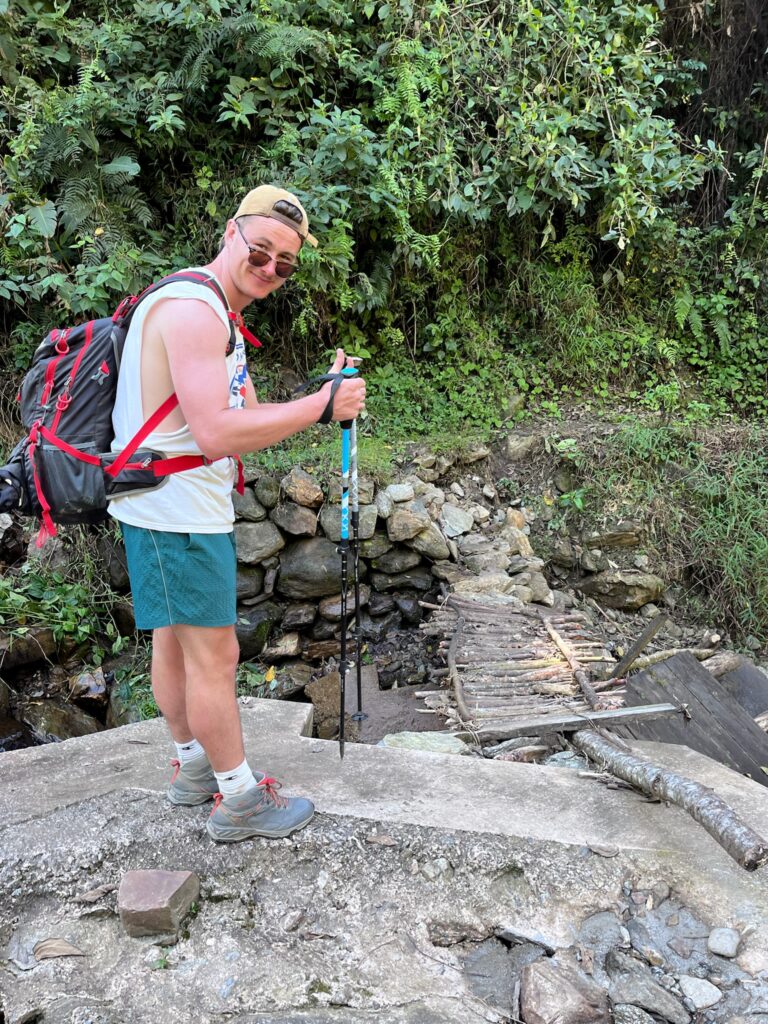
My face trying to figure out the words for “sad bridge” (puente triste) during Day 3 of a 5 day hike to Machu Picchu 🙁
Often Overlooked Accessibility Practices
Something that really stood out to me from this week’s content is how many accessibility practices are actually simple to do, yet they still get overlooked a lot. Small things like adding alt text to images, using proper headings so readers can move through a page more easily, and writing descriptive links instead of just saying “click here” can make a big difference. When I reflect on my own uses sometimes I overlook things like alt text with images, especially when I’m quickly putting together slides or posting something online. It’s not intentional, it just isn’t something that automatically comes to mind unless you’ve been taught to think about accessibility while designing. This really shows how important it is to build awareness around accessibility. When people start considering it from the beginning, these small steps can easily become part of their normal routine and help make online spaces more accessible for everyone. I think it just highlights the importance of being (slightly) more detail oriented.
Why do you think many digital accessibility practices aren’t more well-known or commonly used?
I think a lot of digital accessibility practices aren’t very well-known because people simply do not learn about them. Although there has been a lot of positive progression in the world of accessibility, I think the digital version of it somewhat “flies under the radar”. I don’t think this is intentional whatsoever. Details on digital resources need to be a little more inclusive and deliberately laid out. It can be simple things such as an extra line of descriptive text, allowing all forms of readers to navigate a resource more easily. For a small example here is a photo with a descriptive caption and link below.

One of my favourite football players of all-time, Keenan Allen, making a miraculous one-handed catch. https://www.nfl.com/videos/can-t-miss-play-keenan-allen-submits-bid-for-catch-of-the-year-on-spinning-grab
On Friday I had the opportunity to join an online workshop discussing the National Film Board of Canada and how it is a handy resource for educators to use in the classroom. As Social Studies is my main teachable topic I found this workshop to be useful and interesting. Utilizing the NFB as a teaching resource is a perfect way to draw in alternative learners in the classroom. It adds an additional layer to multimodal learning, moving past the traditional lectures and textbook work that can have the tendency of boring students. I think it is safe to say that the vast majority of people, adults and kids, enjoy watching films and or documentaries as they often tell stories and provide information to us in a visually engaging manner. The NFB as a resource is perfect for teachers, especially in Social Studies, as it has a vast catalog of films relating to Canadian history, both at domestic and international levels. I recall a university course that I took on American History Through Film and it was extremely engaging. We would study films that detailed significant events and periods in history, often comparing and contrasting between the film and the actual event. This class was a perfect way to engage students and also encourage them to think critically about the film and its portrayals/messages. Could we assess any sort of biases? Films are an extremely beneficial tool that can be used as an entry point for engaging students that otherwise may not be initially interested in a topic. Utilizing the NFB for an exploratory Canadian History project in an upper-level high school history course is an exciting idea. As there are so many different stories and topics within the NFB database, students could research assignments and report on their chosen films, while integrating additional resources. How does this film/event contribute to Canadian history? Consider the film and when it was released? How does it fit within the timeline of our country? What is the cultural significance of the topic?
https://www.nfb.ca/film/ice-breakers/ – Mini-documentary detailing the history of Afro-Canadian hockey in the Maritimes.
